
Stephen King: #25 – Revival

#25 – Revival

Plot

In a small New England town, in the early 60s, a shadow falls over a small boy playing with his toy soldiers. Jamie Morton looks up to see a striking man, the new minister. Charles Jacobs, along with his beautiful wife, will transform the local church. The men and boys are all a bit in love with Mrs. Jacobs; the women and girls – including Jamie’s mother and beloved sister – feel the same about Reverend Jacobs. With Jamie, the Reverend shares a deeper bond, based on their fascination with simple experiments in electricity.

Then tragedy strikes the Jacobs family; the preacher curses God, mocking all religious belief, and is banished from the shocked town.

Review

There are two books on this list that I won’t read again, no matter how much you pay me.  One is yet to be revealed, but the other is Revival.  This book disturbed me in ways I would appreciate not revisiting.  Don’t get me wrong, it’s a fascinating novel but one that left me feeling uneasy about a lot of life’s big questions.

Typically, I’m not a huge fan when King delves into overtly religious themes, but he manages to pull it off deftly in Revival.  He does so because it’s not done screaming from a pulpit but grounded in reality.   

Revival is deliberately paced for the first 75%, but then ends in an absolute flourish.  Once I got into the climatic sequences, I could not put this book down.  I was up until 2am finishing Revival, and then another couple of hours trying to process what I had just read.

My mother will not watch Silence of the Lambs a second time.  I can remember nervously watching that film for the first time waiting to be terrified, but it never happened.  Afterwards I asked her why she was so scared of that movie, and she told me that it wasn’t scary, but the thought of that film was disturbing.  After reading Revival’s ending, I completely understand my mother because I felt the same way upon completion.  

Details

Pages: 405

Dates Read: February – March 2016

Quote: “Religion is the theological equivalent of a quick-buck insurance scam, where you pay in your premium year after year, and then, when you need the benefits you paid for so—pardon the pun—so religiously, you discover the company that took your money does not, in fact, exist.”

Best Part: Getting the long-awaited answer to what happens to us after we die.

Hint for #24: This film was nominated for four Academy Awards in 2000, including Best Picture.


Until next time, peace be the journey.


Stephen King: #26 – ‘Salem’s Lot

#26 – ‘Salem’s Lot

Plot

Ben Mears has returned to Jerusalem’s Lot in hopes that exploring the history of the Marsten House, an old mansion long the subject of rumor and speculation, will help him cast out his personal devils and provide inspiration for his new book. But when two young boys venture into the woods, and only one returns alive, Mears begins to realize that something sinister is at work—in fact, his hometown is under siege from forces of darkness far beyond his imagination. And only he, with a small group of allies, can hope to contain the evil that is growing within the borders of this small New England town.

Review

Previously I’ve mentioned how King’s writing has gotten crisper, cleaner and more concise over the years.  However, his villains – especially those of the paranormal sort – have often acted as nothing more as backdrops to larger human-related issues as King has gotten older.  Make no mistake – in ‘Salem’s Lot, King pens an absolute monster in the vampire named Kurt Barlow.

King has often called ‘Salem’s Lot his favorite book, and it would be hard to argue with the esteemed author.  This novel – while lite on character development – is pure horror.  The plot is one you’ve heard before; a vampire moves into a small town and terrorizes the residents.  However, the way King can accurately capture that fear and tension is riveting.  

Despite lacking fully developed protagonists in certain areas, ‘Salem’s Lot does feature Father Callahan, who is one of my favorite King personas, for his simplistic – but completely authentic and human – characterization.  Father Callahan may be well-meaning, but he’s not perfect, and King is able to demonstrate that effortlessly.

‘Salem’s Lot also features one of my favorite epilogues.  In fact, after I read it, I thought it would set up a potential sequel, but King has confirmed there will be none.  King has mentioned that he felt the storyline complete when he brought back Father Callahan to The Dark Tower series, but I would have loved to read about the possibilities from that final epilogue scene.   

Details

Pages: 653

Dates Read: February – March 2019

Quote: “But when fall comes, kicking summer out on its treacherous ass as it always does one day sometime after the midpoint of September, it stays awhile like an old friend that you have missed. It settles in the way an old friend will settle into your favorite chair and take out his pipe and light it and then fill the afternoon with stories of places he has been and things he has done since last he saw you.”

Best Part: Barlow challenging Father Callahan’s faith.

Hint for #25: Combine Thomas Edison’s enthusiasm for lightning with The Righteous Gemstones.


Until next time, peace be the journey.


Stephen King: #27 – The Dark Tower V: Wolves of the Calla

#27 – The Dark Tower V: Wolves of the Calla

Plot

Roland and his tet have just returned to the path of the Beam when they discover that they are being followed by a group of inexperienced trackers. The trackers are from the town of Calla Bryn Sturgis, and they desperately need the help of gunslingers. Once every generation, a band of masked riders known as the Wolves gallop out of the dark land of Thunderclap to steal one half of all the twins born in the Callas. When the children are returned, they are roont, or mentally and physically ruined.

In less than a month, the Wolves will raid again. In exchange for Roland’s aid, Father Callahan—a priest originally from our world—offers to give Roland a powerful but evil seeing sphere, a sinister globe called Black Thirteen which he has hidden below the floorboards of his church. Not only must Roland and his tet discover a way to defeat the invincible Wolves, but they must also return to New York so that they can save our world’s incarnation of the Dark Tower from the machinations of the evil Sombra Corporation.

Review

The Dark Tower series – at its best – is nothing more than fantastical pure storytelling.  It creates worlds and characters that you can completely get swept away.  It also builds suspense towards exciting climaxes, often involving a large battle scene.  Essentially it is everything Game of Thrones tried to accomplish.  Wolves of the Calla exemplifies nearly the very best of The Dark Tower.

If there is one criticism of this book it is that it felt like the ending was cheapened – slightly – by a late reveal that didn’t seem earned.  Most of this book builds to a large battle scene and then right before it takes place, a new clue is revealed to benefit Roland’s crew.  I’m not against information to help the good guys, but I didn’t like the actual information used in this scenario.

Wolves of the Calla also features Father Callahan, who was a main character in Salem’s Lot (yet to be revealed).  I would have thoroughly enjoyed his presence had I previously read Salem’s Lot, which is a big part of the reason why I eventually decided to start at the beginning of King’s bibliography and work my way down. 

Despite the late arriving reveal, I was still riveted by the final battle scene.  King is incredibly deft at writing clashes, and he’s on top of his game in this one.  His style of writing quickens during the climax and had this Constant Reader unable to put the novel down.

Details

Pages: 931

Dates Read: Pre-2012

Quote: “Your man Jesus seems to me a bit of a son of a bitch when it comes to women, ‘Roland said. ´Was He ever married?´ The corners of Callahan’s mouth quirked. ´No´ he said, ´but His girlfriend was a whore.´ ´Well,´ Roland said, ´that’s a start.´”

Best Part: Gunslingers come in all shapes, sizes, races, genders and can throw plates instead of shooting bullets.

Hint for #26: The characters from What We Do in the Shadows would not appreciate this novel.


Until next time, peace be the journey.


Stephen King: #28 – End of Watch

#28 – End of Watch

Plot

In End of Watch, the diabolical “Mercedes Killer” drives his enemies to suicide, and if Bill Hodges and Holly Gibney don’t figure out a way to stop him, they’ll be victims themselves.

Review

Saying goodbye is never easy, especially when you are certain it means forever.  Heading into the last Bill Hodges novel I knew I was going to have to say a final goodbye to these characters I had become so attached to (Bill, Holly and Jerome).  Even if they survive the novel, there was still a sadness in my head while reading because I knew this was it.  (Or so I thought at the time!)

Brady Hartsfield is one of my all-time favorite Stephen King antagonists.  He’s drawn a horrible lot in life and has chosen sadistic violence as his means to escape.  But he’s also technologically savvy and has a personal vendetta against our main protagonist Bill Hodges.  In End of Watch, Hartsfield also dives into the paranormal, which was an excellent choice by King.  

It would have been very easy for King to mess up the ending of this trilogy, but as a master of his craft, King delivers a perfect capstone to not only Bill Hodges but the entire series.  One of my favorite movie quotes is by Kevin Nealon in Happy Gilmore, “Feel the flow Happy.  Feel it.  It’s circular.  It’s like a carousel.  You pay the quarter, you get on the horse, it goes up and down, and AROUND.  It’s circular.”  Anyone who has read End of Watch would appreciate Nealon’s assessment. 

Details

Pages: 432

Dates Read: August 15, 2016 – September 1, 2016

Quote: “Because things can get better, and if you give them a chance, they usually do.”

Best Part: Brady Hartsfield discovering the power of his newly founded abilities.

Hint for #27: You would not want to be a twin in this story.


Until next time, peace be the journey.
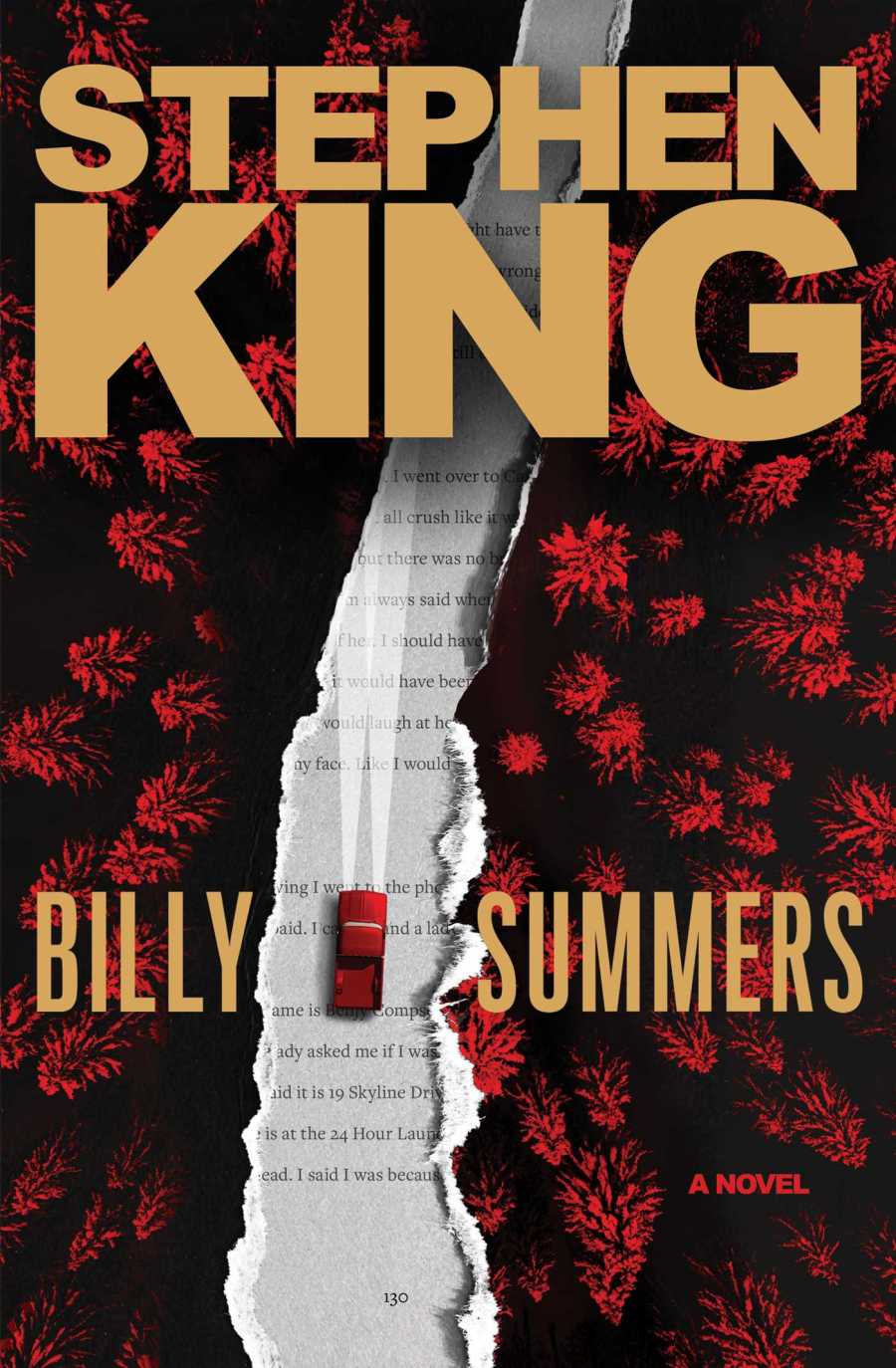
 

Stephen King: #29 – Billy Summers

#29 – Billy Summers

Plot

Billy Summers is a man in a room with a gun. He’s a killer for hire and the best in the business. But he’ll do the job only if the target is a truly bad guy. And now Billy wants out. But first there is one last hit. Billy is among the best snipers in the world, a decorated Iraq war vet, a Houdini when it comes to vanishing after the job is done. So, what could possibly go wrong?

Review

Stephen King’s writing has gotten crisper and more concise as he’s gotten older.  His more recent novels – while not all outstanding – benefit from King honing his craft over the last four decades.  Billy Summers has outstanding dialogue sequences, tight plot details and builds memorable characters.  It was an absolute delight to read.  

Billy Summers does not delve into the paranormal but centers around a hitman performing his “one last job.”  While this is not a unique concept, King is able to generate plenty of compelling plot lines which makes Billy Summers into a page-turner.    

One interesting detail involves Billy Summers (the protagonist) pretending to be dumber than he really is to the mobsters who hire him.  Obviously, the goal of this facade is to have a built-in advantage when push inevitably comes to shove.  We’ve seen this several times from our antagonists, but it worked even better when it came from the good guys.  

Details

Pages: 515

Dates Read: August 4 – August 14, 2021

Quote: “You can’t help how you feel. Feelings are like breathing. They come in and go out.”

Best Part: The immediate aftermath of Billy’s assassination attempt on Joel.

Hint for #28: This novel unrelatedly shares its name with a movie starring Jake Gyllenhaal and Michael Pena as Los Angeles police officers.


Until next time, peace be the journey.