
Stephen King: #9 – The Institute

#9 – The Institute

Plot

In the middle of the night, in a house on a quiet street in suburban Minneapolis, intruders silently murder Luke Ellis’s parents and load him into a black SUV. The operation takes less than two minutes.

Luke will wake up at The Institute, in a room that looks just like his own, except there’s no window. And outside his door are other doors, behind which are other kids with special talents—telekinesis and telepathy—who got to this place the same way Luke did: Kalisha, Nick, George, Iris, and ten-year-old Avery Dixon. They are all in Front Half. Others, Luke learns, graduated to Back Half, “like the roach motel,” Kalisha says. “You check in, but you don’t check out.”

Review

The Institute is peak Stephen King storytelling.  It’s also a reflection of an author who has absolutely perfected his craft over the preceding decades.  The Institute is full of dramatic moments, captivating dialogue sequences and unforgettable characters.

There is not one single aspect of this book that I did not find enjoyable.  It was one of the easiest reads I’ve encountered as King brings the action up front, provides layer after layer of character development in the middle, and closes with an action and emotionally packed finale.  Chef’s kiss.

The Institute felt a little like Firestarter where it centers around a secret governmental agency working with children who possess special abilities.  The difference being The Institute dealt with a collection of unique children while Firestarter had one girl as its primary focus.  King enhanced Firestarter by creating a bigger and more realized cast in The Institute, although it did have me missing Rainbird.

Reading this book had me thinking how wonderful this would be as a television series.  A complex cast of memorable children.  A mysterious government facility.  A would-be hero is currently down on his luck.  Sound like any Netflix shows you may have recently watched?

Details

Pages: 561

Dates Read: September – October 2019

Quote: “Great events turn on small hinges.”

Best Part: Luke and Avery becoming friends.

Hint for #8: Gary Potter (Kevin Nealon) from Happy Gilmore was inadvertently talking about this book: “Oh yeah. Lotta pressure. You gotta rise above it. You gotta harness in the good energy, block out the bad. Harness. Energy. Block. Bad. Feel the flow Happy. Feel it. It’s circular. It’s like a carousel. You pay the quarter, you get on the horse, it goes up and down, and AROUND. It’s circular. Circle, with the music, the flow. All good things.”


Until next time, peace be the journey.
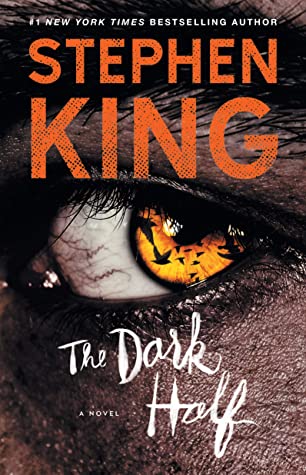
Stephen King: #10 – The Dark Half

#10 – The Dark Half

Plot

Thad Beaumont is a writer, and for a dozen years he has secretly published violent bestsellers under the name of George Stark. But Thad is a healthier and happier man now, the father of infant twins, and starting to write as himself again. He no longer needs George Stark and so, with nationwide publicity, the pseudonym is retired. But George Stark won’t go willingly.

Review

The Dark Half was written by King in direct response to the findings that he was also Richard Bachman.  Not that King was trying to hide that fact, but after it was universally known, King released The Dark Half.

The premise is very dark – right up there with Pet Sematary – and one that would make for a difficult re-read.  What would happen if the pseudonym an author uses for selling novels manifests itself into a human form?  And what if that manifestation was angry when you stopped writing under that pseudonym? 

The comparisons between Bachman and George Stark (the pseudonym) are too numerous to name, but once the story started rolling, I forgot all about Bachman.  George Stark is dark, brutal, and unforgiving.  But he’s also made Thad Beaumont a great and respected author.  That duality adds to the complex character development that takes place in The Dark Half.

This novel also has some comparisons to The Outsider.  When George starts his murder spree, he leaves behind Thad’s fingerprints.  As a result, Thad becomes the prime suspect.  It takes multiple conversations with Sherriff Pangborn (a nice callback from Needful Things) to convince him otherwise.

In looking at my rankings, The Dark Half is the highest rated pure horror novel on this list.  It sits inside the Top Ten because of the intricate character development, the intense and dark plot, and the thrilling climax.  A fantastic read from start to finish.  

Details

Pages: 515

Dates Read: January – February 2021

Quote: “You’re dead, George. You just don’t have the sense to lie down.”

Best Part: My wife – who is terrified of birds – would not like the climax. On the other hand, I thought it was brilliant.

Hint for #9: Those with mental problems and are at risk to others, may be admitted here.


Until next time, peace be the journey.

Stephen King: #11 – Elevation

#11 – Elevation

Plot

In the small town of Castle Rock, the setting of many of King’s most iconic stories, Scott Carey is engaged in a low grade—but escalating—battle with the lesbians next door whose dog regularly drops his business on Scott’s lawn. One of the women is friendly; the other, cold as ice. Both are trying to launch a new restaurant, but the people of Castle Rock want no part of a gay married couple, and the place is in trouble.

When Scott finally understands the prejudices they face–including his own—he tries to help. Unlikely alliances, the annual foot race, and the mystery of Scott’s affliction bring out the best in people who have indulged the worst in themselves and others.

Review

Elevation is not widely considered a Stephen King classic, and in fact, if you look at its Goodreads rating (3.66) it’s not even considered a good Stephen King book.  However, it’s one of my favorites because of the imagery and the emotion it provokes.  

The premise is relatively simple and mirrors that of Thinner – where the main character is gradually and uncontrollably losing weight.  However, Elevation is not about what is happening as much as how Scott’s perception of life changes as a result.  

Change is difficult.  Damn near impossible for some.  And yet oftentimes life throws things at us that forces us to rethink our priorities and our perspectives.  This is what Elevation accomplishes.  The final scene was earned through the novel’s 140+ pages and was as an emotional-inducing ending as I’ve ever read.

I think back to some of the previous Stephen King novels – in particular those that were near the bottom of this list, and I wonder if they could have benefitted from being written as a novella instead of a super-novel.  Elevation, and other shorter King books have an intense focus and very few wasted scenes/conversations.  Had King tried to stretch this book out another 200+ pages, my guess is it lands 20-30 spots lower.  

Details

Pages: 146

Dates Read: November 2018

Quote: “Everyone should have this, he thought, and perhaps, at the end, everyone does. Perhaps in their time of dying, everyone rises.”

Best Part: The annual foot face.

Hint for #10: If Jekyll was considered good – or the light half – then Hyde would be considered this.


Until next time, peace be the journey.

Stephen King: #12 – The Dark Tower I: The Gunslinger

#12 – The Dark Tower I: The Gunslinger

Plot

In The Gunslinger (originally published in 1982), King introduces his most enigmatic hero, Roland Deschain of Gilead, the Last Gunslinger. He is a haunting, solitary figure at first, on a mysterious quest through a desolate world that eerily mirrors our own. Pursuing the man in black, an evil being who can bring the dead back to life, Roland is a good man who seems to leave nothing but death in his wake.

Review

In my humble opinion, the opening line of The Gunslinger is the best beginning sentence of any novel in the history of the written word.  The man in black fled across the desert and the gunslinger followed.  It’s simple.  It’s complex.  It’s perfect.  

The Gunslinger is not a perfect story.  It can be difficult to read and even harder to understand.  But what The Gunslinger does is introduce us to the best Stephen King character in his entire universe, Roland Deschain.

When it came time to name our child – the middle name was an easy choice, as we went with Roland.  Both my grandfather and my favorite Stephen King character shared the same first name.  It was a no brainer.

King not only introduces us to Roland – the last remaining gunslinger – but he introduces us to his entire fantasy world.  It’s part western, part science-fiction and part fantasy.  It has some unique terminology and incredible scene-setting.  

The final scene with Roland and the man in black reaffirmed my love with Stephen King.  It was my favorite part of the story by a mile because it was just two characters with a fire and a story to tell.  The dialogue and interaction between these two pivotal players completely set the table for the rest of The Dark Tower series. 

Details

Pages: 300

Dates Read: Pre-2012

Quote: “The man in black fled across the desert, and the gunslinger followed.”

Best Part: The man in black and Roland palaver.

Hint for #11: If you visit Denver, Colorado for the first time, you might notice a change in this.


Until next time, peace be the journey.

Stephen King: #13 – The Outsider

#13 – The Outsider

Plot

An eleven-year-old boy’s violated corpse is found in a town park. Eyewitnesses and fingerprints point unmistakably to one of Flint City’s most popular citizens. He is Terry Maitland, Little League coach, English teacher, husband, and father of two girls. Detective Ralph Anderson, whose son Maitland once coached, orders a quick and very public arrest. Maitland has an alibi, but Anderson and the district attorney soon add DNA evidence to go with the fingerprints and witnesses. Their case seems ironclad.

As the investigation expands and horrifying answers begin to emerge, King’s propulsive story kicks into high gear, generating strong tension and almost unbearable suspense. Terry Maitland seems like a nice guy, but is he wearing another face?

Review

The Outsider is structured very similarly to The Black House in that it opens with an ongoing murder investigation, but eventually turns into more of a supernatural horror novel.  

King made excellent use of written transcripts from police interrogations as well as newspaper articles to help move along the narrative.  I’ve said it before, but I honestly believe King’s writing has improved as he has gotten older.  His ideas may have been better in the 1980s, but his execution is now on the level of a master storyteller.

Thankfully I read the Bill Hodges trilogy before I picked up The Outsider as having that background unexpectedly paid huge dividends midway through this novel.  As I was reading about a new character who previously showed up with Bill Hodges, I wondered to myself, “how many more of these have I missed by reading his newer stuff first?”  We course-corrected immediately.

HBO picked up The Outsider starring Jason Bateman and Ben Mendelsohn.  Generally, it portrayed some of the pure horror, violence, and suspense of the novel with some decent acting performances.  When compared to some other productions based on King’s novel, it was a huge success.

The Outsider started off as a whodunit, evolved into a deeper mystery, and ended with a bloody climax.  It developed characters (both old and new) well, and completely held my interest throughout.  It had all the makings of a classic Stephen King tale.  

Details

Pages: 561

Dates Read: October – November 2018

Quote: “People are blind to explanations that lie outside their perception of reality.”

Best Part: Maitland’s arraignment and the unavoidable clues it left behind.

Hint for #12: My son’s middle name – Roland – is loosely based off the main character in this book, who we meet for the very first time.


Until next time, peace be the journey.